

Photo by Trei Johnson
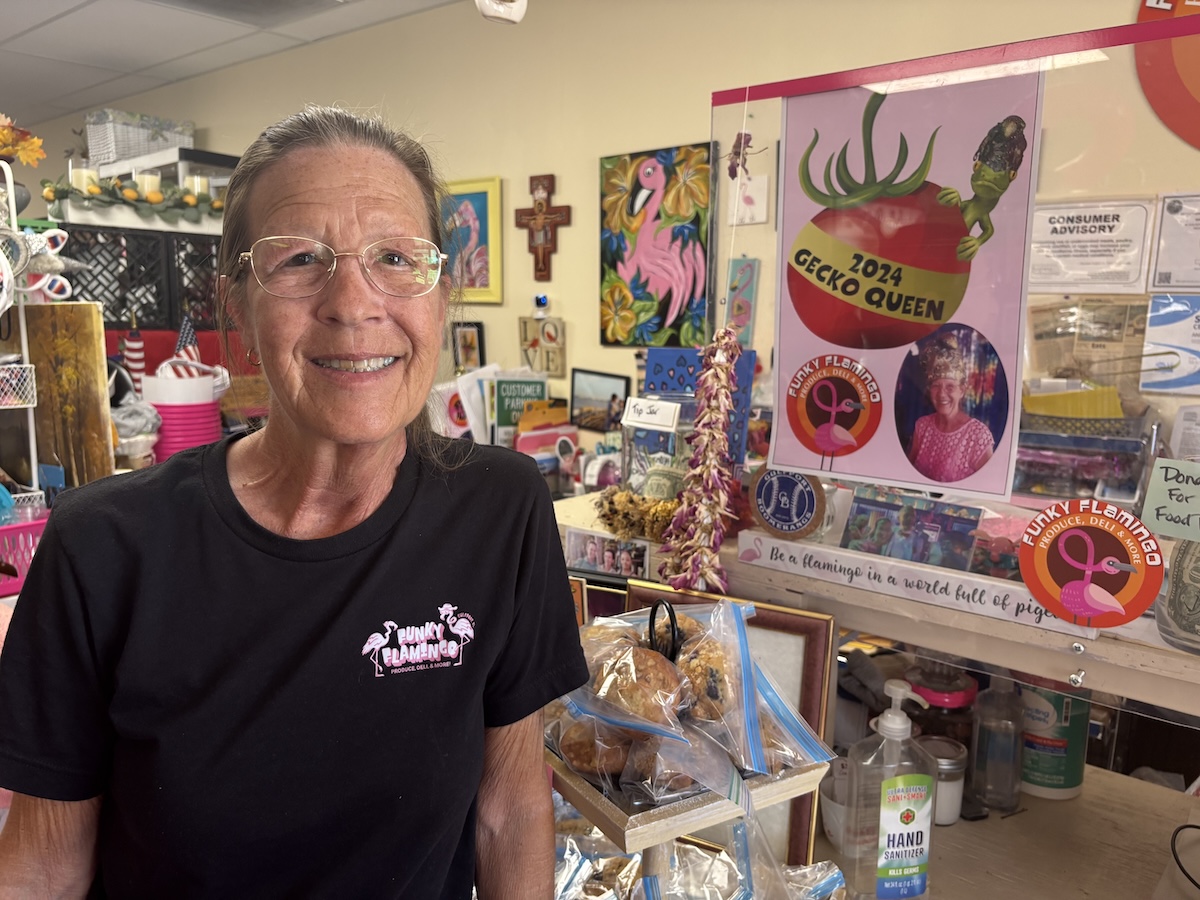
At Funky Flamingo, older adults, families short on groceries, and people without stable housing can visit once a week, choose what they need from a free pantry and leave without explaining why. Owner Anita McLaughlin built the pantry around dignity, a standard she said a recent donation failed to meet.
While sorting through the large Sunday donation, McLaughlin found opened packages, dirty containers, food removed from its original packaging and products dated as far back as 2022. She refused to place the items on the pantry shelves.
“If you won’t eat it, don’t bring it,” she later wrote on Facebook. “I’m not your dumping ground.”
Condition Raised Safety Concerns
McLaughlin told The Gabber Newspaper the printed dates were only part of the problem.
“It was opened, expired, dirty, and not in original containers,” she said.
McLaughlin called the donation unsafe and said food safety drove her decision to reject it.
Food does not automatically become unsafe after passing a date printed on its label. The Florida Department of Agriculture and Consumer Services says manufacturers typically use “best if used by,” “use by,” and “sell by” dates to indicate quality or help stores manage inventory rather than establish food safety.
However, this donation raised multiple concerns at once. Open or damaged packaging can expose food to contamination, while missing labels make it difficult to identify ingredients, allergens, or recalled products. She also had no way to verify how the food had been stored before it arrived.
A Pantry Inside a Licensed Business
McLaughlin operates the pantry inside Funky Flamingo, where she also runs a licensed food business. She said that responsibility affects how she evaluates every product entering the store, whether she plans to sell it or give it away.
“I have a restaurant license. I have to maintain certain standards,” McLaughlin said. “Even if I didn’t, I still would. There’s a moral obligation.”
McLaughlin said she will not lower her standards because the pantry distributes food for free.
People in Need Deserve the Same Standards
She also rejected the argument that questionable food is “better than nothing.” McLaughlin said that attitude stereotypes pantry users and treats hardship as a reason to accept lower standards.
“We don’t feed just homeless people and it shouldn’t be stereotyped,” she said.
McLaughlin explained that this pantry also feeds older people, children, and families, and “they shouldn’t be treated any differently.”
Her Facebook post sparked debate, with some commenters pointing out that canned and shelf-stable foods often remain usable beyond their printed dates. Others agreed that food banks and pantries should never receive donations that donors would refuse to eat themselves.
McLaughlin said the discussion should focus on food safety rather than expiration dates alone. The items she rejected were not simply old; some had been opened, were dirty, lacked original packaging, or could not be traced to safe storage conditions.
Food Poisoning Can Deepen a Crisis
She said distributing questionable food could have serious consequences for people who already face significant challenges. Food poisoning may be especially dangerous for someone without stable housing, transportation, medical care, or a private place to recover.
“I don’t know if you’ve ever had food poisoning. I don’t wish that on anybody, ever,” she said. “And imagine being homeless and food poisoned. What do you do?”
Donation Protections Have Limits
Florida law provides some liability protection for people and organizations that donate food in good faith, but those protections do not excuse unsafe food handling or reckless conduct. McLaughlin said her experience handling food leaves her with little room to overlook questionable products.
For her, accepting a donation also means accepting responsibility for what happens after someone eats it.
Her message to future donors is simple: Check the dates, inspect the packaging and donate only food you would feel comfortable serving to your own family.
Keep Your Community Local: Donate Now To Support Us
Donate now to support The Gabber Newspaper. The owners of the paper take no income from the paper. Every penny donated helps keep your community news hyperlocal. And everyone who earns their living working at The Gabber Newspaper lives in Gulfport and St. Petersburg. Most of our freelancers live here, too. We support our community; please support us.
The Gabber Newspaper? Yeah, We Go There.
Did you know: In 1968, our founder, George Brann, started The Gabber Newspaper, then called the Gulfport Gabber, to hold Gulfport City Council accountable. Read more of our city council coverage, and learn about our policies on reporting, fact-checking, and funding.
Get all your Gulfport and Tampa Bay beaches news and things to do at thegabber.com.
