

Photo courtesy of Adobe Stock
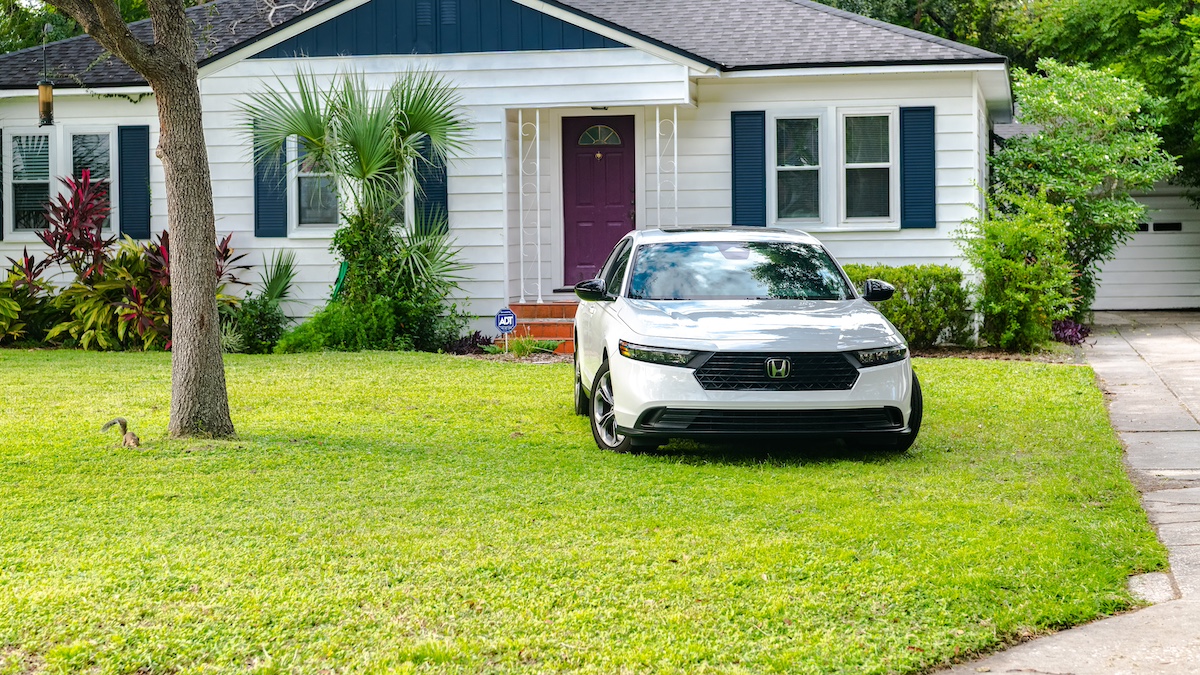
Kenneth City residents can no longer park most vehicles on grass or bare ground under a newly adopted ordinance that also regulates street parking, recreational vehicles, and driveway expansions.
The Town Council adopted Ordinance 2026-04 on July 8. Officials began a 30-day education period afterward to give residents time to learn the rules and adjust before enforcement begins. Town employees have distributed door hangers throughout Kenneth City explaining the changes.
The ordinance has raised questions about enforcement, parking costs, and the Town’s authority to regulate vehicles on private property. In response, the Town released a 54-question public response packet outlining how it plans to apply the new rules.
New Parking Surface Rules Take Effect
The ordinance generally prohibits residents from parking vehicles on grass or bare ground. Vehicles must be parked on approved surfaces, including concrete, asphalt, pavers, and permeable materials such as rock, shell, gravel, or stone.
Residents do not have to repave or expand existing driveways. However, any new parking area must use an approved surface.
The Town’s response packet states that residents do not need permits to install rock or shell parking areas. Concrete or asphalt projects may require planning and zoning approval or a utility right-of-way permit depending on their location.
The ordinance separately requires a permit when a property owner expands a driveway to park or store an RV.
The Town did not grandfather properties where residents previously parked vehicles on grass.
Limited Exceptions Allow Some Grass-Side Parking
One exception allows a resident with a single-width driveway to park one regular vehicle beside the driveway on the garage side of the home, opposite the front door.
The vehicle must remain at least 3 feet from the edge of the pavement to maintain visibility. The exception does not apply to RVs.
Residents may also expand driveways on either side of the property using an approved surface.
Street Parking Remains Legal With Restrictions
The ordinance does not prohibit overnight street parking. Residents and guests may continue parking on streets unless posted signs prohibit it.
Vehicles must leave at least 20 feet of roadway open to allow emergency vehicles, including firetrucks and ambulances, to pass.
Drivers may not park:
- On sidewalks or bicycle lanes
- In front of or directly across from driveways
- In front of mailboxes
- Within 15 feet of fire hydrants
- Within 30 feet of crosswalks or intersections
- On bridges
- In painted roadway areas
- In areas marked “No Parking”
The overnight restriction applies to Town-owned property, not residential streets. Vehicles left overnight on Town property require written approval from the Town Manager or a designee.
The ordinance does not limit how many vehicles a household may own. Residents with more vehicles than driveway space may use legal street parking or create additional parking areas with approved surfaces.
RVs, Boats and Trailers Face New Requirements
Residents may keep RVs, boats and boat trailers in front, side, or rear yards if they are parked on approved surfaces.
RVs cannot block sidewalks, extend into roadways, or obstruct required visibility areas.
The ordinance allows residents to park an RV temporarily for loading or unloading for up to 48 hours. RVs undergoing repairs may remain in a rear yard for up to 60 days if they have current registration.
Residents generally cannot use parked RVs as living quarters. The Town Manager may approve exceptions, and the restriction does not apply during natural disasters under the conditions outlined in the ordinance.
Commercial and Heavy Equipment Restrictions
The Town prohibits tractors, semi-trailers and heavy construction or land-clearing equipment on residential property except when being used for deliveries or services.
Contractors and landscapers may park trailers while actively working, but they must maintain the required 20-foot roadway clearance.
Enforcement Will Begin After Education Period
Kenneth City said code enforcement will remain complaint-driven and focus on correcting violations rather than issuing immediate fines.
The Town also said it will not use drones to inspect residents’ backyards.
The Town’s parking guide lists a $50 fine for each violation and states that each day a violation continues may be treated as a separate offense. The ordinance itself refers to a separate fine schedule adopted by the Town Council rather than including the $50 amount directly.
Police and code enforcement officers may issue parking tickets. The ordinance also allows towing when specifically authorized or when a vehicle blocks emergency access. Vehicle owners are responsible for applicable towing and storage costs.
Temporary Parking Exemptions Available for Events
Property owners may request temporary parking exemptions for organized events that affect streets or public access.
Private gatherings at homes do not require special-event parking permits.
Keep Your Community Local: Donate Now To Support Us
Donate now to support The Gabber Newspaper. The owners of the paper take no income from the paper. Every penny donated helps keep your community news hyperlocal. And everyone who earns their living working at The Gabber Newspaper lives in Gulfport and St. Petersburg. Most of our freelancers live here, too. We support our community; please support us.
The Gabber Newspaper? Yeah, We Go There.
Did you know: In 1968, our founder, George Brann, started The Gabber Newspaper, then called the Gulfport Gabber, to hold Gulfport City Council accountable. Read more of our city council coverage, and learn about our policies on reporting, fact-checking, and funding.
Get all your Gulfport and Tampa Bay beaches news and things to do at thegabber.com.
